
You Can't Manage What You Haven't Mapped: The Case for Defining Your Customer Journey
If you've ever wondered why your ecommerce store gets decent traffic but lackluster conversions — or why customers add to cart and then disappear into thin air — the answer is almost always the same: somewhere along the path from "I've never heard of you" to "I just bought something and I'm telling my friends," there's a gap. A missed message, a confusing experience, an unanswered question. And the reason that gap exists is usually because no one sat down and mapped the journey.
The customer journey isn't a buzzword. It's the actual sequence of experiences, emotions, and decisions a real person goes through before, during, and after buying from you. And for ecommerce brands, defining that journey — and intentionally managing every touchpoint within it — is one of the highest-leverage things you can do for your marketing.
What the Customer Journey Actually Looks Like
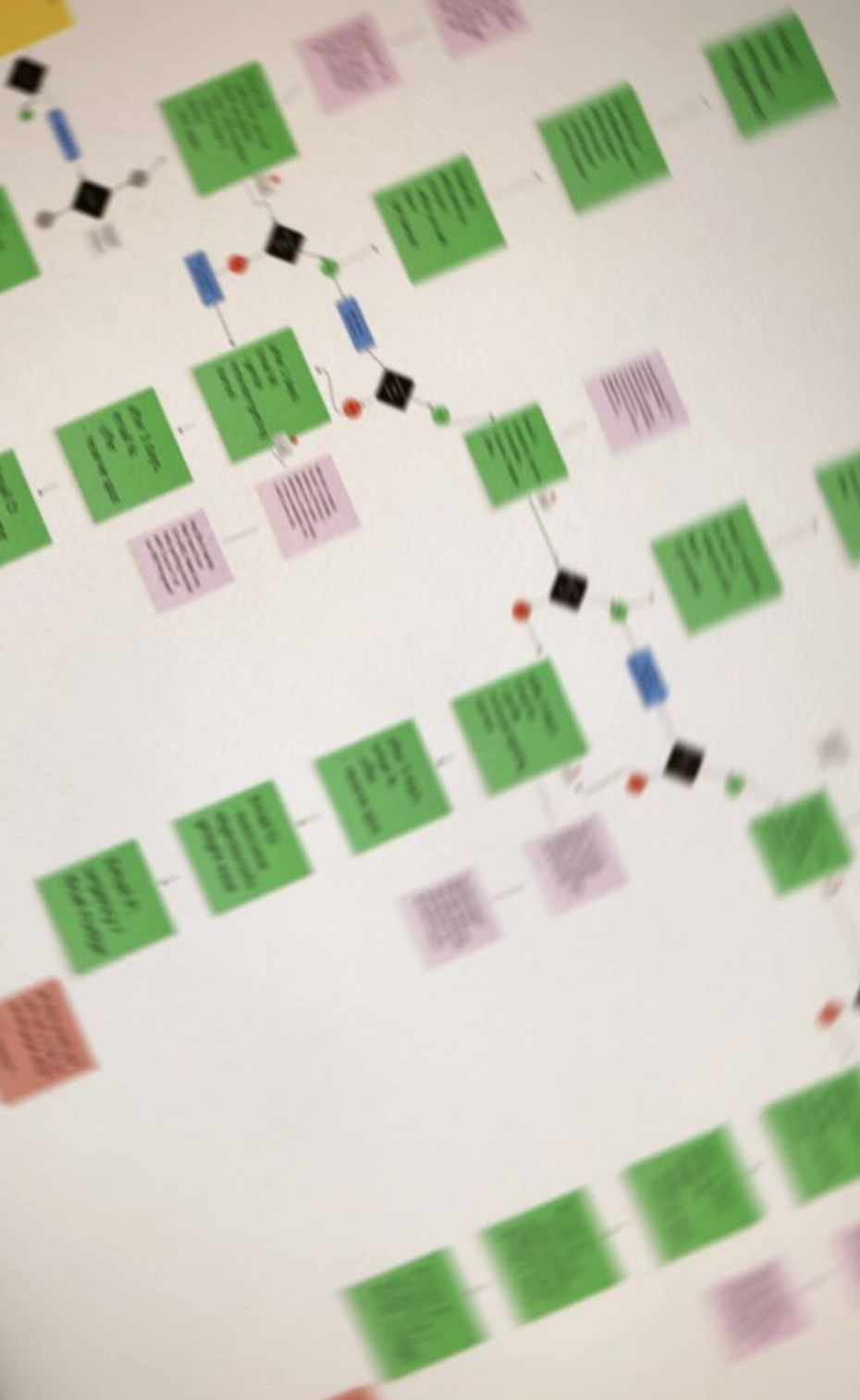
Most marketers have heard of the funnel: awareness, consideration, purchase. But for ecommerce, that model is too thin. It misses the messy middle where most customers actually live, and it completely ignores what happens after the sale — which is where loyalty, lifetime value, and word-of-mouth are born or buried.
A more useful way to think about the ecommerce customer journey has five phases:
Awareness is when someone first encounters your brand. Maybe they saw a paid social ad, stumbled onto a blog post, or a friend texted them your link. They don't know you yet, and they're not looking to buy. Your job here is simply to make a strong enough impression that they remember you.
Consideration is when a potential customer starts actively evaluating whether you're worth their money. They're reading your product pages, comparing you to competitors, looking at reviews, maybe poking around your Instagram. This is where trust is built or broken.
Conversion (decision time) is the moment of purchase — but it rarely happens in one click. Someone might add to cart, leave, get a retargeting ad, come back, read your return policy, and then buy. The decision phase is full of micro-moments, and each one is a chance to either close the sale or lose it.
Retention is everything after the first purchase. Did you make it easy for them to track their order? Did you follow up with helpful content or a timely reorder reminder? Did you make them feel like a valued customer or just a transaction number?
Advocacy/Loyalty is when a happy customer starts doing your marketing for you — leaving reviews, sharing on social, recommending you to friends. This phase doesn't happen by accident. It's the result of delivering a great experience from start to finish and, often, a gentle nudge at the right moment.
Why Most Brands Skip the Mapping Step
Defining the customer journey takes time, and it requires empathy — the willingness to look at your business through the eyes of someone who doesn't know or care about it yet. Most founders and marketers skip this step because they're too close to their own product. They assume they know how customers experience the brand, but they're actually describing how they experience it.
The result is marketing that talks at people instead of meeting them where they are. Awareness campaigns that confuse someone unfamiliar with the brand. Abandoned cart emails that show up too late or with the wrong message. Post-purchase sequences that never exist at all.
When you don't have a defined journey, every marketing decision gets made in a vacuum. You run an influencer campaign without thinking about where traffic lands or what happens next. You spend money on ads without a retention strategy in place to make that acquisition cost worthwhile. Everything is disconnected, and your results reflect it.
Touchpoints: Where the Journey Becomes Real
If the customer journey is the map, touchpoints are every town on it. A touchpoint is any moment a person interacts with your brand — an ad impression, a Google search result, a product page visit, an email, a package in the mail, a DM to your support account.
The number of touchpoints before a purchase has been growing for years. Today's ecommerce customer might interact with your brand seven, eight, ten or more times before they convert. That means ten opportunities to build trust — and ten opportunities to erode it.
Managing your touchpoints means two things. First, it means making sure you have touchpoints at each stage of the journey. If someone discovers your brand through a paid ad, visits your site, and doesn't convert, what happens next? Is there a retargeting campaign? An email capture with a compelling offer? A strong organic social presence they might follow? If the answer is nothing, you're losing people who were genuinely interested.
Second, managing touchpoints means ensuring consistency. Your brand voice, your visual identity, your value proposition — these should feel coherent whether someone is reading a Facebook ad, clicking through an email, or landing on your product page. Inconsistency creates cognitive friction. It makes people feel like they don't quite know who you are, and that uncertainty costs you conversions.
How to Start Mapping Your Own Journey
You don't need an elaborate workshop with multiple stakeholders to map your customer journey. You need clarity, honesty and lotssss of time. And perhaps, a solid marketing partner to guide you through the process, asking the right questions and doing the work so you can focus on what matters - your business and your customers.
Start by picking a single customer persona — your best customer, the one you'd clone if you could — and walk through every step they take from first discovery to repeat purchase. Write it down. For each stage, ask: How are they finding us? What are they thinking and feeling? What do they need to know to move forward? What might make them hesitate or drop off?
Then audit your current touchpoints against that map. Where do you have strong coverage? Where are the gaps? Where are you sending a message that doesn't match where someone is in the journey? An awareness-stage ad that leads to a hard-sell landing page is a mismatch. A consideration-stage shopper who gets a "thanks for subscribing" email with no product content is a missed opportunity.
Once you've audited, prioritize. You don't have to fix everything at once. Pick the two or three gaps that are costing you the most — often the space right after initial awareness and the post-purchase experience — and build from there.
My favourite tool is a good old giant whiteboard - then when you are ready, a tool like Miro works well to transform it into a digital, editable version.
The Brands That Win eCommerce Are Journey-Obsessed
The best ecommerce brands don't just have great products. They have great experiences — end to end, touchpoint to touchpoint. They know who their customer is, how that customer moves through the world, what questions they're asking at each stage, and what it takes to answer those questions better than anyone else.
That kind of intentionality doesn't happen without mapping. It doesn't happen without sitting down and asking, honestly: what is it actually like to be someone who finds us for the first time? And then building a marketing strategy around the answer.
If you haven't done that work yet, this is your sign to start. Because your competitors are either doing it or they're about to — and in ecommerce, the brands that understand their customers best almost always win.
Want help mapping your customer journey or auditing your current touch points? Let's talk.
